Insight
How to Write Professional Text Messages Your Customers Will Love
You know texts get read by customers—but what should you actually say in those texts?
Below we’ll cover how to text professionally in different contexts, plus message examples for each, including:
General text messaging etiquette
Essentials for promotions and marketing texts
Advice for one-on-one texting with clients
Pointers for sending massive group or company-wide texts
Automated texts for streamlining workflow
How to use a texting service to to manage professional text conversations
Keep reading to learn how to write professional messages that grab customers’ attention, drive action, and leave customers glad they did business with you.
5 General Guidelines for Writing Professional Text Messages
Use these guidelines regardless of what industry you’re in.
1. Get consent before you text your contact.
How do you text someone for the first time professionally? You make sure you have consent first.
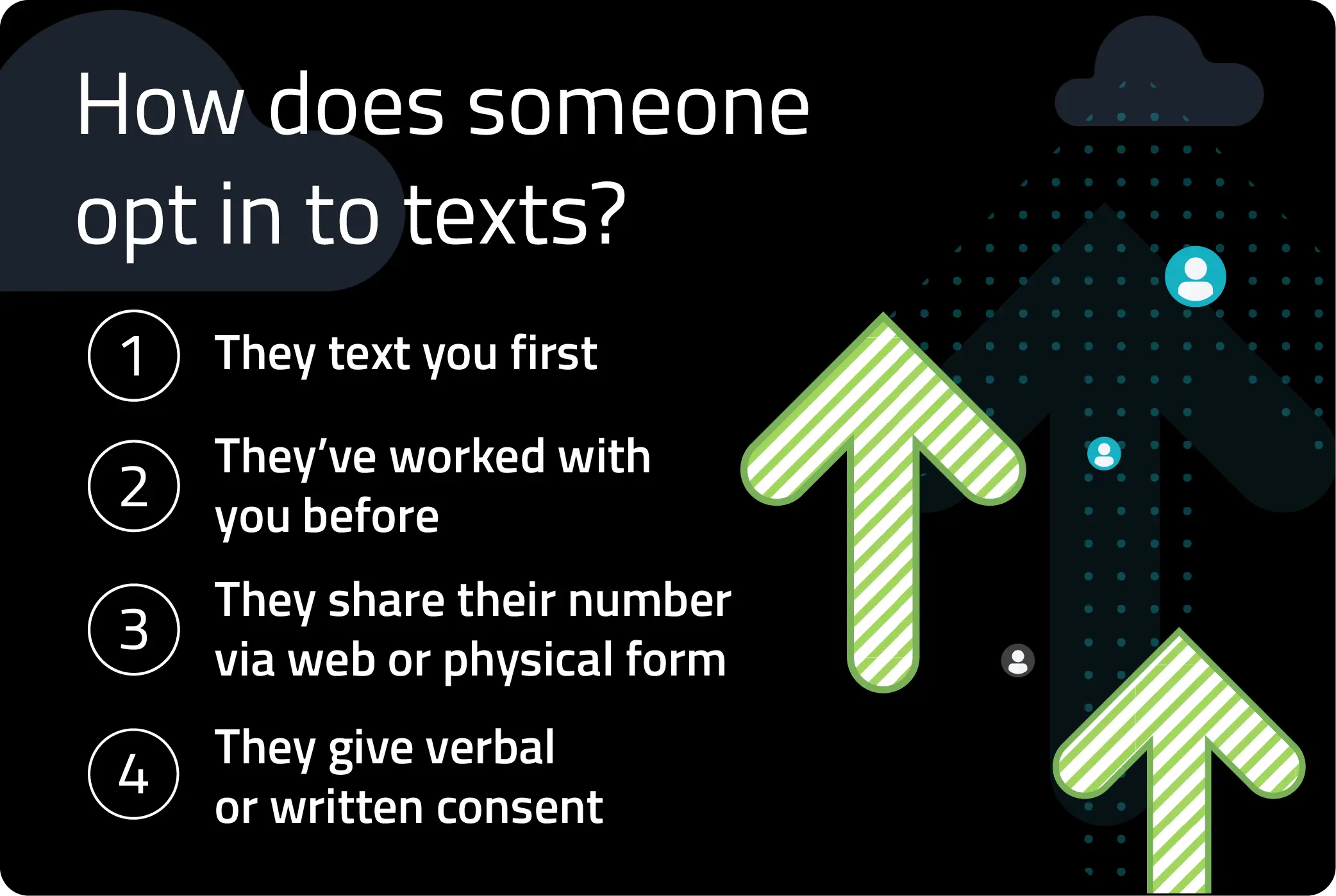
Contacts can give you consent, or “opt-in” for your text messages, by:
Texting you first
Establishing a business relationship with you (making a purchase or requesting a service)
Giving you their phone number via web or physical form
Giving verbal or written consent for you to text them
For step-by-step instructions on getting opt-ins, check out our guide on how to build an SMS subscriber list.
2. Keep your length concise.
Don’t treat text messages like email. Keep them short and to the point.
“Hey [Name], did you get a chance to look at that link I sent you?”
Vs.
“[Name], last week I sent you a link that may help you organize your tasks, and I was wondering if you found it useful. I’d love to discuss your thoughts on if we’re heading in the right direction on your current project, plus what other useful resources I could send your way.”
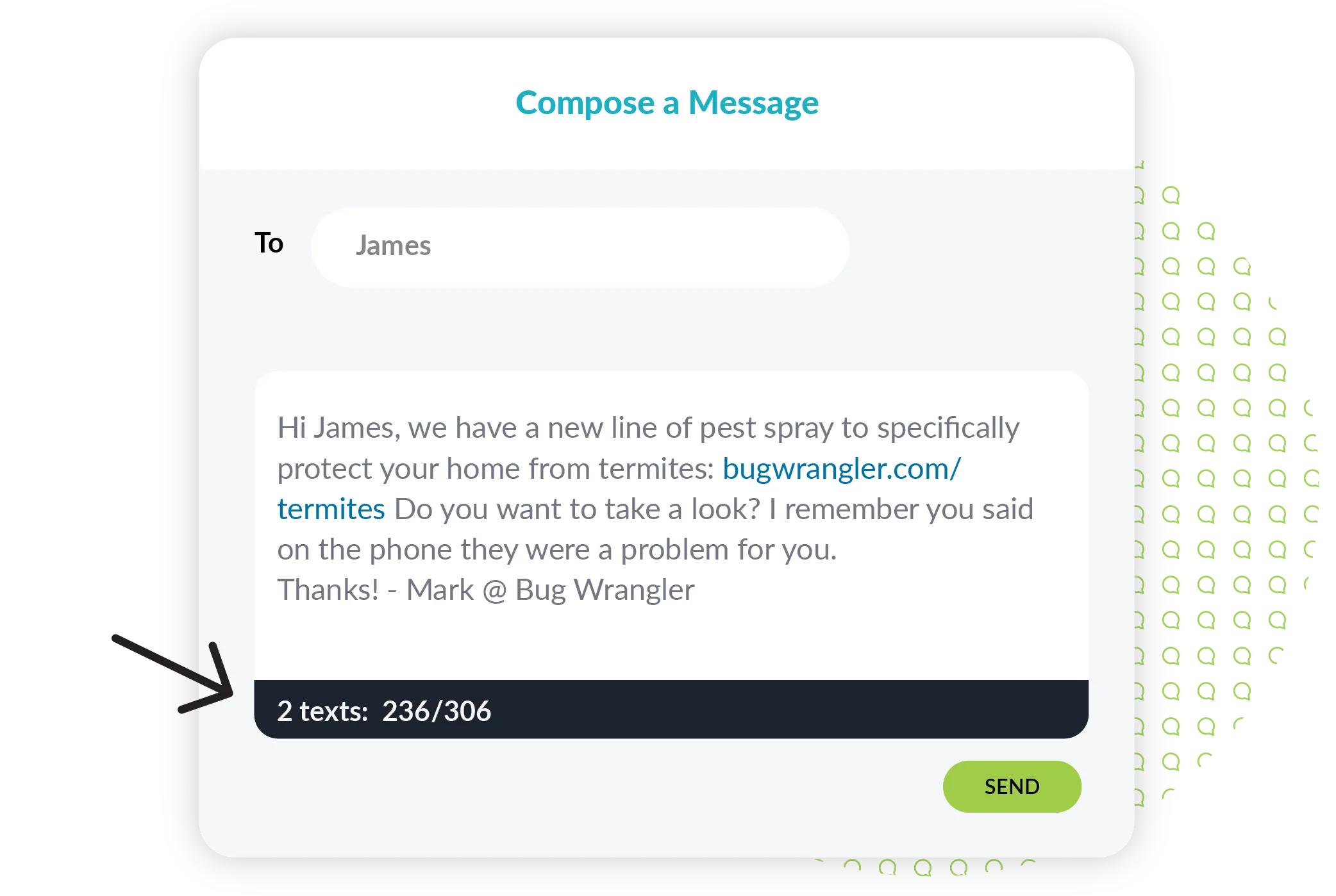
Staying under 160 characters is a great rule of thumb. It’s fine to go over occasionally, but be conscious of length. Text Request’s character counter makes that easy.
3. Use a casual, human voice.
Customers want texts to feel like they’re coming from a real person, not a corporate memo. Text the way you’d text a friend:
Sentences don’t have to be complete
Throw in the occasional emoji when talking to customers one-on-one
Leave out unnecessary words
Don’t overdo abbreviations and lingo. Generation-specific lingo can alienate parts of your audience.
“Get 15% off your next brick-and-mortar purchase by using the code: CHEERS”
Vs.
“hi bestie, this is your sign 🔥 15% off your next purchase, no cap—so pull up before it’s gone frfr 💀”
4. Be intentional with send times.
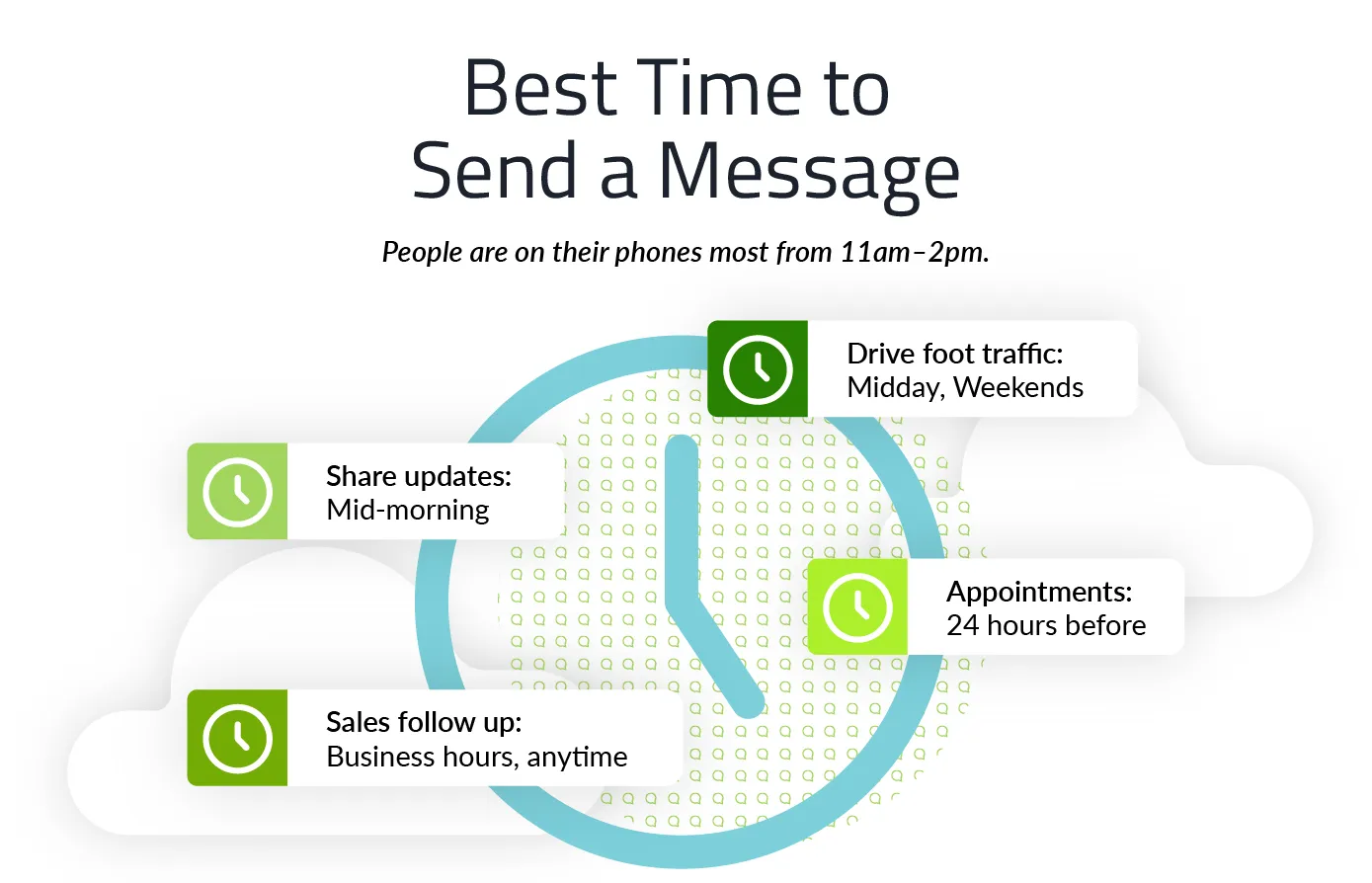
Treat timing like any other marketing channel. The time of day and week matter. Most customers are active between 11 a.m. and 2 p.m., so that’s a safe default window. But it’s important to check what’s accurate for your audience.
Stick to normal business hours unless the message is time-sensitive, like an emergency or event. Or if your target customers are more likely to chat after hours, like in real estate and recruiting.
Once you’ve nailed down when you want to send your message, you can either send your text(s) at that time, or schedule them in advance using Text Request and move on to other tasks.
Pairing texts with your email and social media marketing efforts helps messages stick. The more times someone sees something, the more likely they are to take action.
5. Always give customers an easy way to opt out.
It needs to be just as easy to leave a conversation as it is to start one. Include a clear opt-out option, like a simple “reply STOP to unsubscribe” prompt.
It’s not just good etiquette—it’s required for compliance. It also builds trust that keeps customers opted in to the messages they actually want.
Now that we’ve covered the basic musts for text messages, let’s look at specific use cases.
5 Essentials for Professional Marketing Text Messages
SMS marketing texts exist to get contacts to either click a link or reply, moving them toward:
Booking a service
Registering for an event
Giving online reviews or referrals
The big question here is:
How do you hook every person who sees your SMS marketing texts, and get them to take action?
1. Capture attention with personalization.
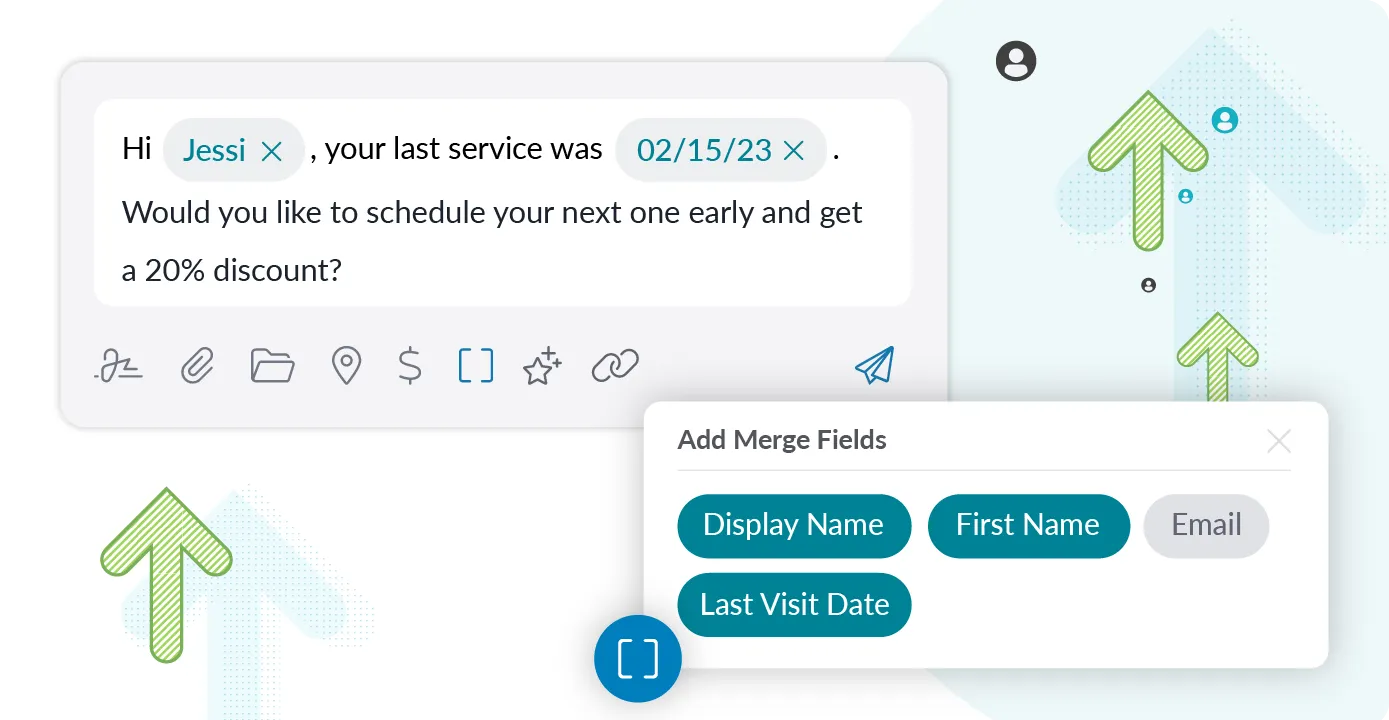
Customers expect texting to be personal, so personalize your messages as much as possible. Use your customers’ names, and only send them messages about things you know they’ll be interested in, based on previous purchases or interactions.
Merge Fields give you the power to add customizable fields, like name or last purchase, to personalize your messages. Groups let you segment contacts based on their specific interests and buying habits.
“Hey, [Name]! Still enjoying your [product]? We gathered a list of our other items that pair great with it. Visit [link] to view them.”
Vs.
“New sale on our latest shipment. Click [link] to see what came!”
2. Show customers why they should care.
There’s one important question you need to ask when crafting marketing texts:
What value will this bring to my customers?
Use the answer to shape your message, so you’ll inspire customers to take action.
Keep it simple. Pick one thing to emphasize—like the quality of the new product, or the purpose of the yearly service. Make sure you include that value in your message, so customers know exactly why they should care.
“This time of year is rough for [problem]. Visit [link] to learn how [service] can keep you ahead of the curve.”
Vs.
“We have a seasonal discount on [service].”
Too many details at once will be overwhelming, so focus on giving them one key thing to be excited about.
Including one image or emoji can also add a bit of a punch. Just make sure you only include images and emojis in messages to small groups, so you avoid getting marked as spam by carriers.

3. Create urgency with a deadline.
Time-sensitive offers drive action. A limited time service or a low-stock item will catch your customers’ attention every time. Add urgency right after you state the value.
“Only 5 spots left for our Saturday class. Book here: [link] before they fill up!”
Vs.
“We have a class coming up on Saturday, in case you’re interested.”
4. Point customers to the next action.
You’ve put all the work into grabbing your customers’ attention. Now it’s time to tell them exactly what to do next, and share a direct link so they know exactly where to go.
“Tap here: [link] to see the full menu and order now.”
Vs.
“We hope you have a great day!”
5. Track performance and refine as you go.
Text Request automatically shortens and tracks link click rates, so you can see what’s actually working and adjust future sends accordingly.
If open or click rates drop, that’s your cue to tweak the offer, the wording, or the timing.
Ready to put it all together? Check out our SMS marketing and promotions text message templates.

5 Pointers For Texting with Customers One-On-One
One-to-one conversations need a different approach than a mass promotion. Here’s what works for customer service, feedback, and sales texts.
1. Know common answers to your common questions.
Track the questions you hear the most, and write out solutions ahead of time. You can use data from your customer guides to determine which questions people are asking, or just ask your sales and support reps.
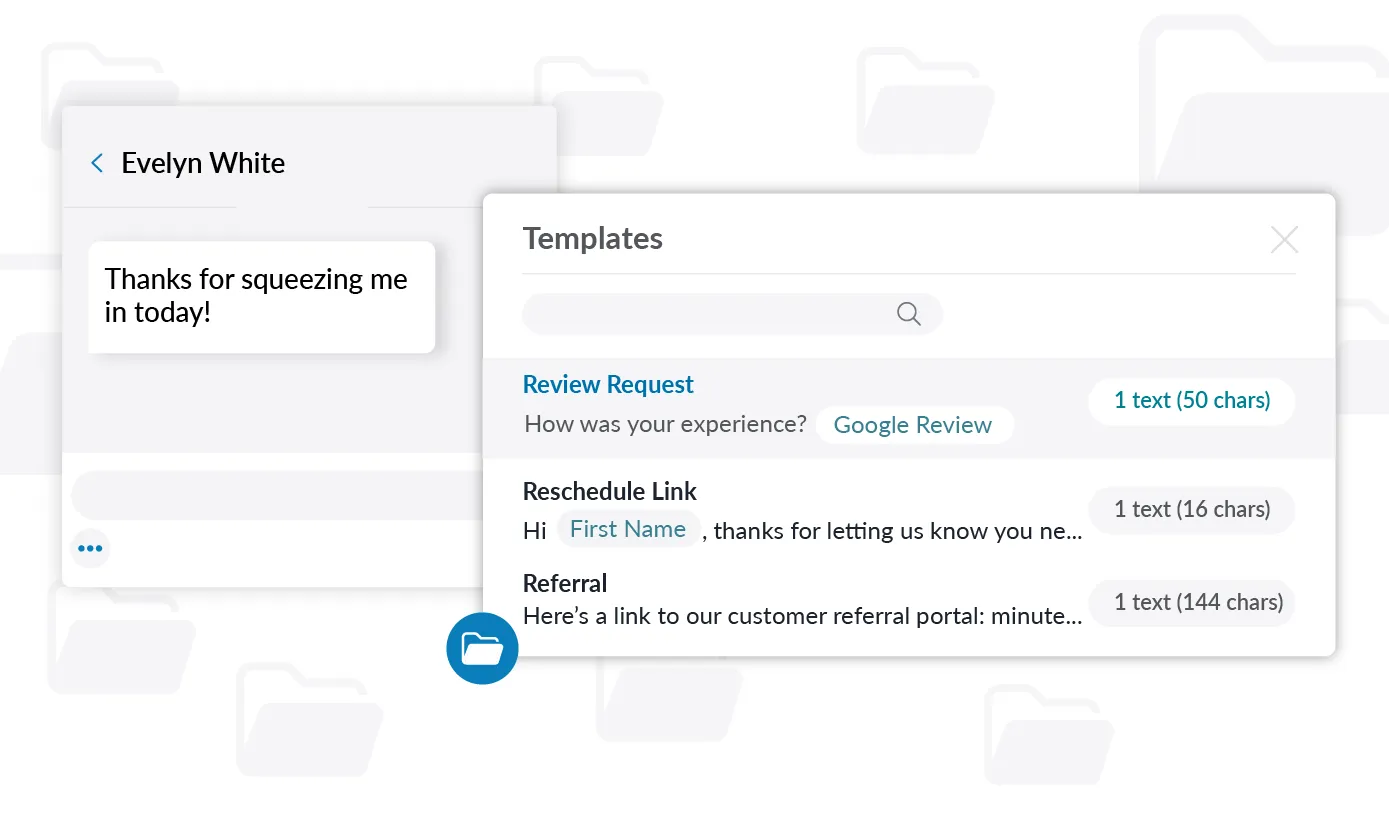
Once you have your list of top questions, you can plug the answers into the Templates section of Text Request.
Templates not only help you get information to customers faster—they also keep communications consistent across employees. That helps everyone work better, faster, stronger.
2. Share pictures to stay on the same page.
A picture saves a thousand characters. That’s a lifesaver when you’re working against tight character limits.
Send pictures to your customers when you’re:
Providing an estimate
Sharing documents for discussion
Suggesting parts that need to be replaced
Confirming the job is complete
And more
Pictures help you ensure things are moving forward without missing a beat.
3. Know when to move a conversation from text to phone call.
Whenever you’re working with people, there’s always a chance things will get complicated.
We recommend moving the conversation to a phone call whenever:
The customer is stuck or confused
You have to deliver bad news, like a mistake or broken promise
The customer accuses you of something that could potentially hurt your reputation
You need to hash out something complicated or nuanced
A human voice shows you understand the stakes and helps de-escalate misunderstandings:
“Would you like to schedule a call to keep discussing solutions? One of our reps can be available as soon as you are.”
Or
“Call me when you have a sec, we’ll figure this out.”
4. Use texts to set up calls.
People will typically ignore phone calls they’re not expecting. Use a text to schedule the call first.
There will be times when you need to bring the conversation back to a phone call, in-person meeting, or a link with more information.
Don’t know where to start? We have pre-made text templates for scheduling phone call appointments ready to go.
5. Follow up if the conversation goes quiet.
Customers get busy, and an unanswered text doesn’t always mean no.
A short, low-pressure follow-up text keeps the door open without feeling pushy:
“Hey [Name], just circling back in case my last text got buried. I’m still happy to help whenever you’re ready.”
Texting is the best channel for grabbing customers’ attention, but it’s not the only way you should communicate with them. It should be a complement to the relationships you’re already building to propel your business forward.

3 Musts for Informational Texts and Company Updates
SMS updates and newsletters keep you top of mind. They’re particularly helpful when it comes to sharing things like hours changes or new protocols.
Here’s what we recommend when sending out informational texts.
1. Space out your messages.
Sending out an SMS newsletter once a week is ideal.
Sprinkle in some educational content to keep customers engaged, like:
Industry specific insights
The best time to schedule a service
Tips for getting the most out of your product
“How To” guides
Anything your customers can use to make their lives better
Messages like these help to establish you as an industry expert that customers depend on, while retaining their interest in your brand.
2. Include all relevant information for important updates.
Include as much relevant detail as possible when it comes to updates that actually affect customers, such as:
Hours of operation
Changes to staff or process
New offerings
Or when you need customers to take a required action
Only send messages when you have something important to share. Don’t just text for the sake of texting.
3. Only text opt-in contacts.
Never add customers to SMS newsletters and updates without their expressed permission.
Give them the option to decide if they want these frequent updates by promoting keywords.
A keyword is a word customers can text you to be added to a specific Group for information. You can advertise these keywords on your:
Website
Social media
Email
Digital ads
All it takes is a simple call to action, like:
“Text DEALS to [business phone number] to get updates on our latest discounts and offers!”
Keywords are also useful for opting in new contacts for future text campaigns.
3 Recommendations for Automated Texts
Most businesses want automated texts for appointment confirmations, payment reminders, online reviews, and sometimes as part of a marketing or sales workflow.
For any of these, here’s what to do.
1. Tell customers a real person will follow up with them ASAP.
Include your return time for after-hours autoresponses, or let customers know they can text back to reach a rep. Remind them that even though the message is automated, a real person will get back to them.
It’s the kind of customer experience that will earn you more conversions, reviews, and referrals.
2. Include a link for additional help or information.
Depending on the context you can also provide them with the tools to get additional information on their own with links to:
Educational guides
A calendar to reschedule or set up a new appointment
Common FAQs
Image galleries of products
A list of your current services
This keeps prospective customers moving through your funnel, and gives current ones valuable info without needing a rep.

3. Leave them with the next step while they wait.
A customer texting after hours probably needs help fast, and they’re probably messaging your competitors too.
An autoresponse with a help form or scheduling link gives them something to do right now, and keeps them from moving on to another business.
How to Use a Business SMS Service to Manage Texting with Customers
A business texting service like Text Request can text-enable your current business number, so customers, prospects, and staff can reach you the way they most prefer.
Text Request enables you to text from each of your location’s business lines, so your entire team can text from the same place. Each location can have its own line, with no limits on users.
We also offer a host of different tools to make managing text conversations with the rest of your team a breeze:
Contact Tags: Color-coded tags show which rep owns a conversation at a glance.
Scheduled Messages: Type a message now, then schedule it to send at a later time or date. This helps your reps to plan around their workday.
Reviews: Connect your locations’ Google Business pages to Text Request, so you can easily earn, track, and respond to online reviews all from one place. Online reviews are the #1 way people decide whether or not to work with a business.
Groups: Segment your contacts by customer type, location, or use case for targeted sends. This is helpful not only for identification, but also for when you need to message your groups for something specific—like a new promotion or solution.
User Permission Levels: Assign your Text Request users to permission levels that fit their levels of expertise to prevent oversights.
Templates: Templates are pre-written messages that help you save time, and keep communications consistent across your entire team.
Visit our full library of text message templates here.
Send Your Own Professional Text Messages Today
Now that you know what to say, when to say it, and what to avoid, you’re ready to ignite customer engagement by sending professional texts your customers will love.
Use the text messaging tips we shared throughout this post with confidence, knowing why they work and how they appeal to your customers to maximize engagement.
Ready to get started? See firsthand how texting can boost your business by scheduling a demo today.
FAQ
1. How long should a professional text message be?
Aim for 160 characters or less. It’s okay to go over occasionally, but the shorter and more direct you are, the better your response rate will be.
2. Do I need consent to text customers?
Yes. Consent comes from customers texting you first, an existing business relationship, a web or physical opt-in form, or verbal/written permission.
3. Is it okay to use emojis in business texts?
Emojis should be used sparingly in mass texts since carriers tend to flag heavy emoji-use at scale. They work well for one-on-one conversations, though.
4. How often should I send SMS updates or newsletters?
About once a week is the sweet spot. That’s enough to stay top of mind without overwhelming your SMS subscriber list.
5. What’s the best way to handle an unhappy customer over text?
Acknowledge the issue quickly and keep your reply short. From there, you can offer to move to a phone call if the issue needs to be escalated. For quick solutions, text messaging is the ideal tool, whereas phone calls are better suited for more nuanced discussions.